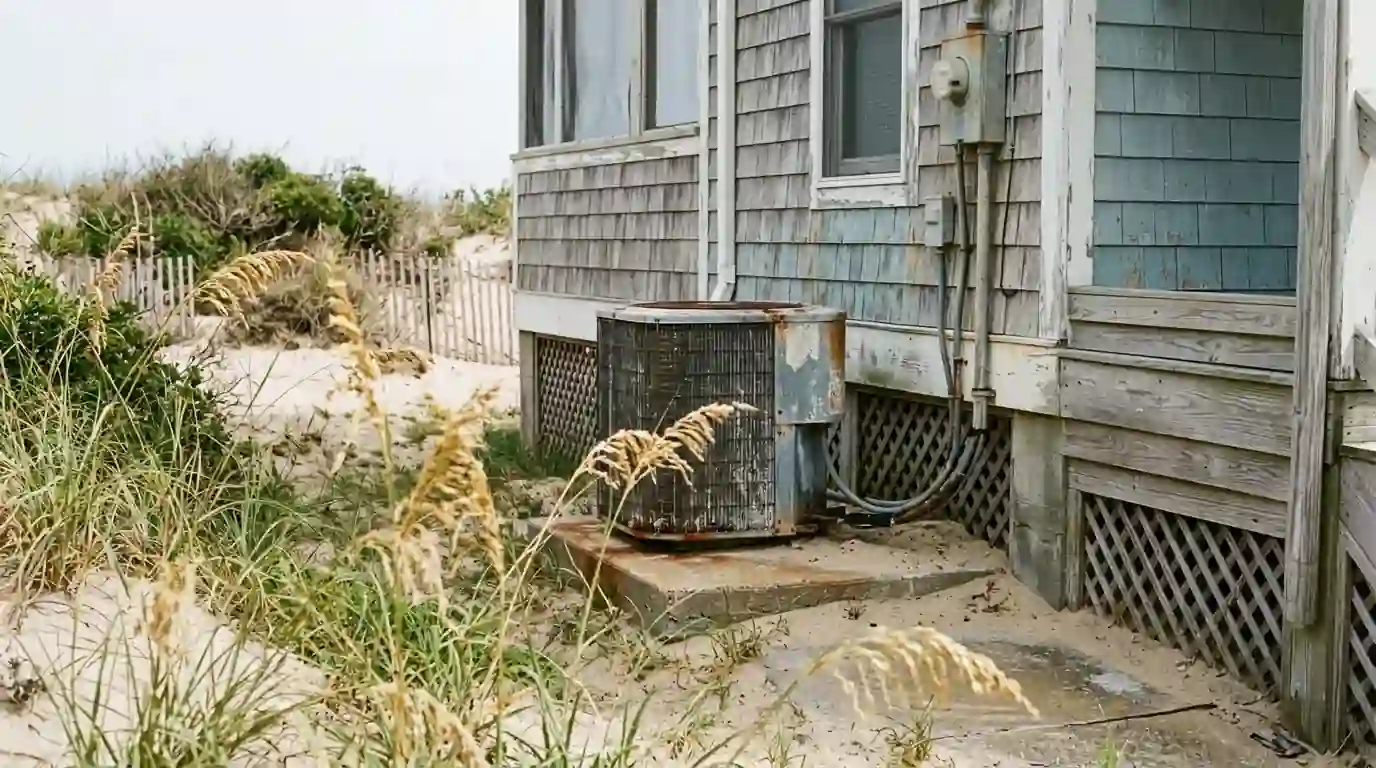
How salt gets in
Onshore wind picks up salt spray and carries it inland. Within about a mile or two of the ocean or the Chesapeake Bay, a fine salt film settles on everything, including the aluminum fins and copper tubes of your outdoor coil. Salt attracts moisture, and that wet film starts galvanic corrosion where aluminum and copper meet.
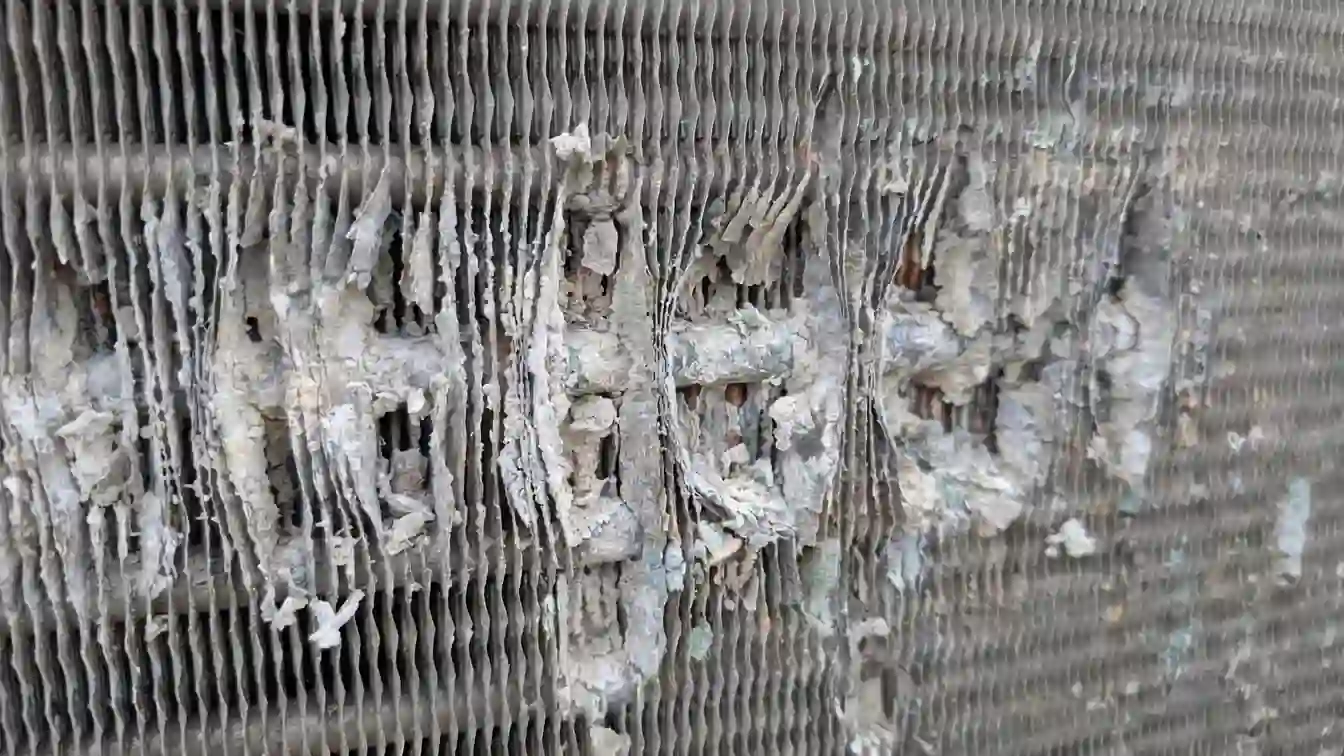
Over a few years the fins turn white and chalky, then begin to flake away. Electrical terminals, contactors and capacitor connections corrode too.
What it costs you
A coil that has lost fins cannot shed heat. The system runs at higher pressure, uses more electricity and struggles on hot afternoons. Eventually the coil develops leaks. In the most exposed spots in North End, Chic's Beach, Sandbridge and Ocean View, we see outdoor units wear out years earlier than the same model a few miles inland.
Signs to look for
White crust or powder on the fins. Fins that crumble when brushed. Rust on the cabinet screws and panels. Green or white corrosion on electrical connections. A unit that runs louder and longer than it used to.
How to slow it down
Rinse the coil gently with fresh water from a garden hose about once a month in summer, with the power off. Spray from the top down and never use a pressure washer, which flattens fins.
Have the coil professionally cleaned once a year, and consider a protective coating on a new or freshly cleaned coil. When you replace equipment, ask about coastal-protected models and coated hardware. Placing the unit on the side of the house away from the prevailing wind also helps when it is practical.
When to replace
Once large areas of fins are gone or the coil is leaking, cleaning will not bring it back. At that point we will show you the cost of a coil or condenser replacement versus a new system, and we will recommend coastal protection for whatever goes in.
Questions about your own system? Call (757) 529-6260, answered 24/7.