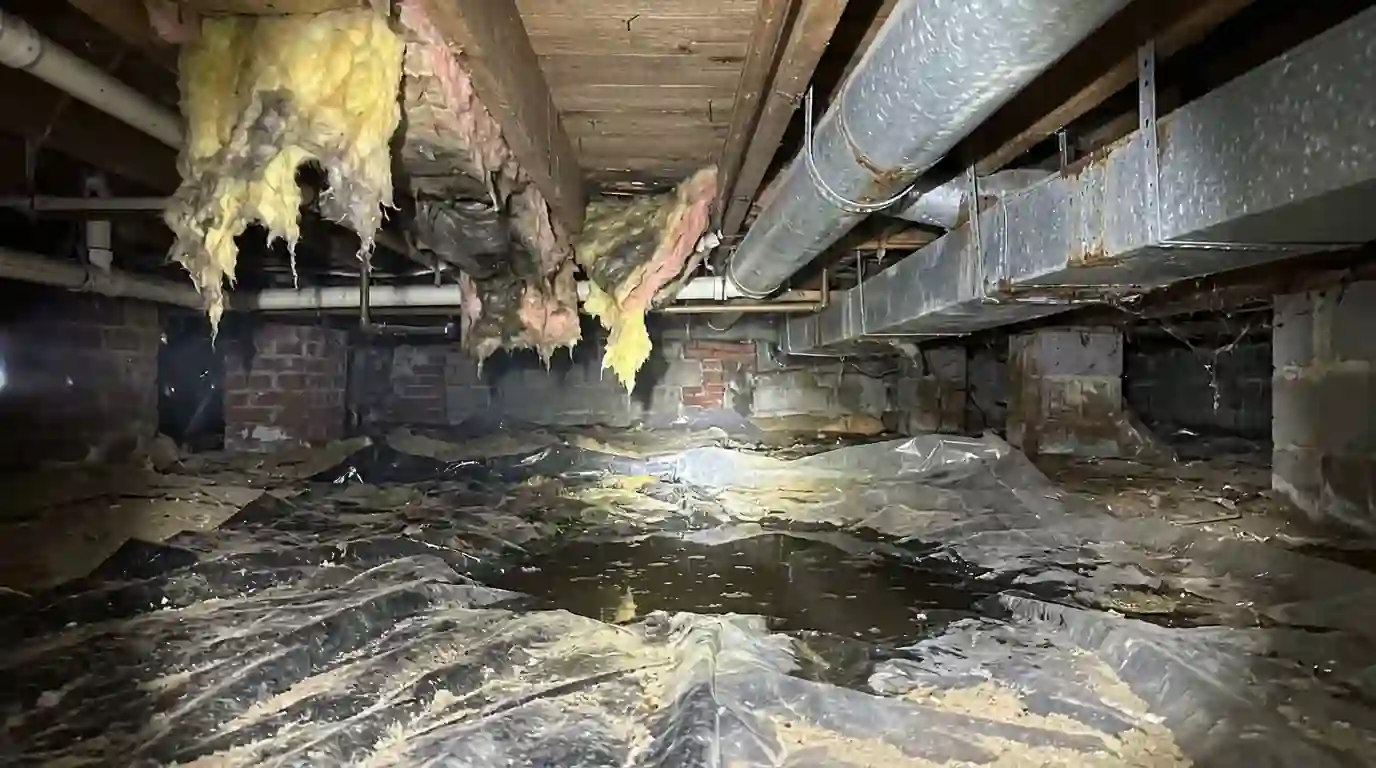
Why ducts sweat
Supply air leaving your air conditioner is around 55 degrees. In a vented crawlspace on a July afternoon, the air around the duct may be 80 degrees with a dew point in the 70s. Any part of the duct surface below that dew point collects condensation, just like a cold glass on a hot day.
Duct insulation is supposed to keep the outer surface warm and dry. When insulation is thin, torn, compressed or missing its vapor jacket, water forms and drips.
What the water does
Dripping water soaks the ground and the insulation, which then holds more water against the duct. Wood joists near the ducts stay damp and can grow mold or rot. The crawlspace air gets even more humid, and some of it rises into the house, which is why many crawlspace homes smell musty in summer.
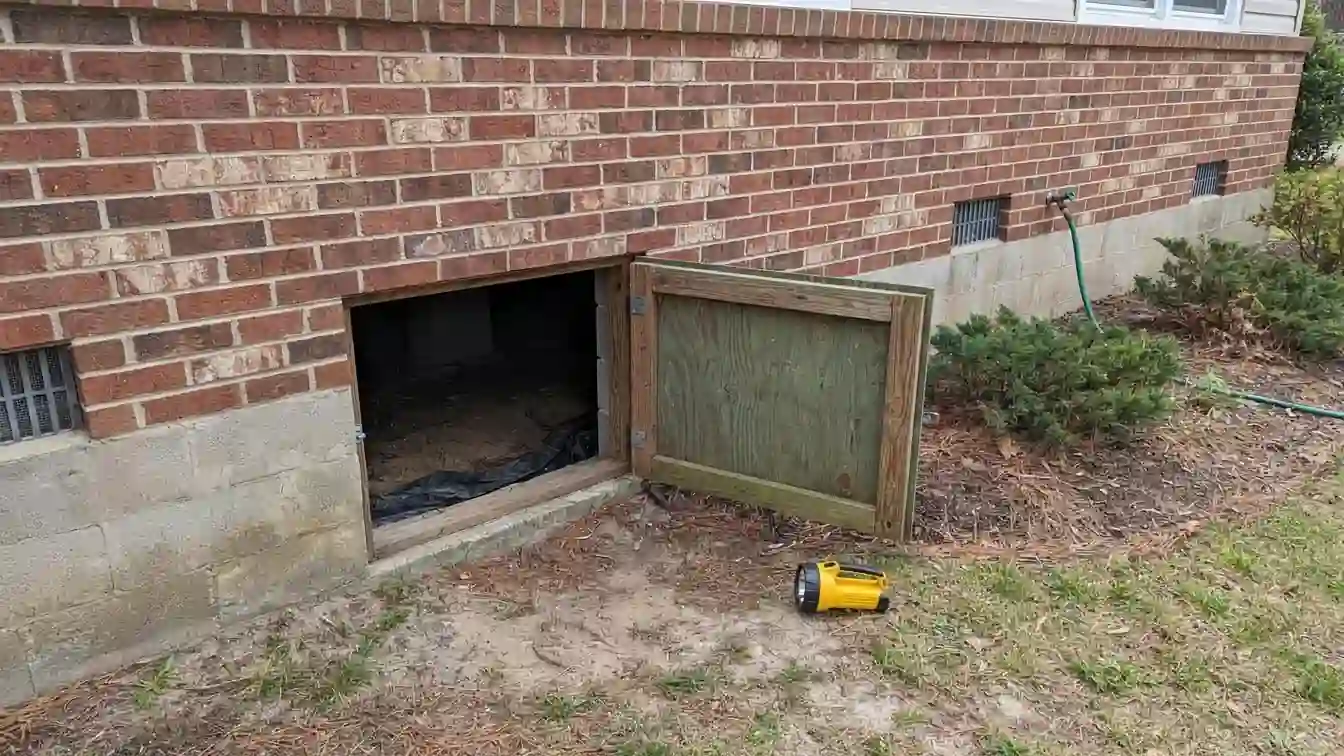
Fixing the duct
Start with the ducts themselves. Seal leaks at every joint with mastic, because a leaky supply duct cools the crawlspace and makes things worse. Replace wet or damaged insulation with a continuous wrap that has an intact vapor retarder, with seams taped. Where duct is rusted through or flex duct has collapsed, replace it.
Fixing the moisture
The duct work alone is often not enough. Most crawlspaces here need a complete vapor barrier on the ground, overlapped and sealed. In many homes, sealing the crawlspace vents and adding a crawlspace dehumidifier, set around 55 percent, keeps the space dry all summer.
Closing vents without a barrier and dehumidifier can trap moisture and make things worse, so treat it as one plan.
What a typical project looks like
We inspect, measure humidity and photograph the ducts. Then we give you a plan in order of impact: duct sealing and insulation first, then the vapor barrier and dehumidifier. Where wood repair or full encapsulation is needed, we coordinate with a crawlspace contractor.
Questions about your own system? Call (757) 529-6260, answered 24/7.