Tie-down straps
Anchors the condenser to its pad.
Coastal and storm
Before hurricane season, we secure outdoor units with tie-downs, add surge protection, check drains and help you plan how to shut down and restart the system safely around a storm.
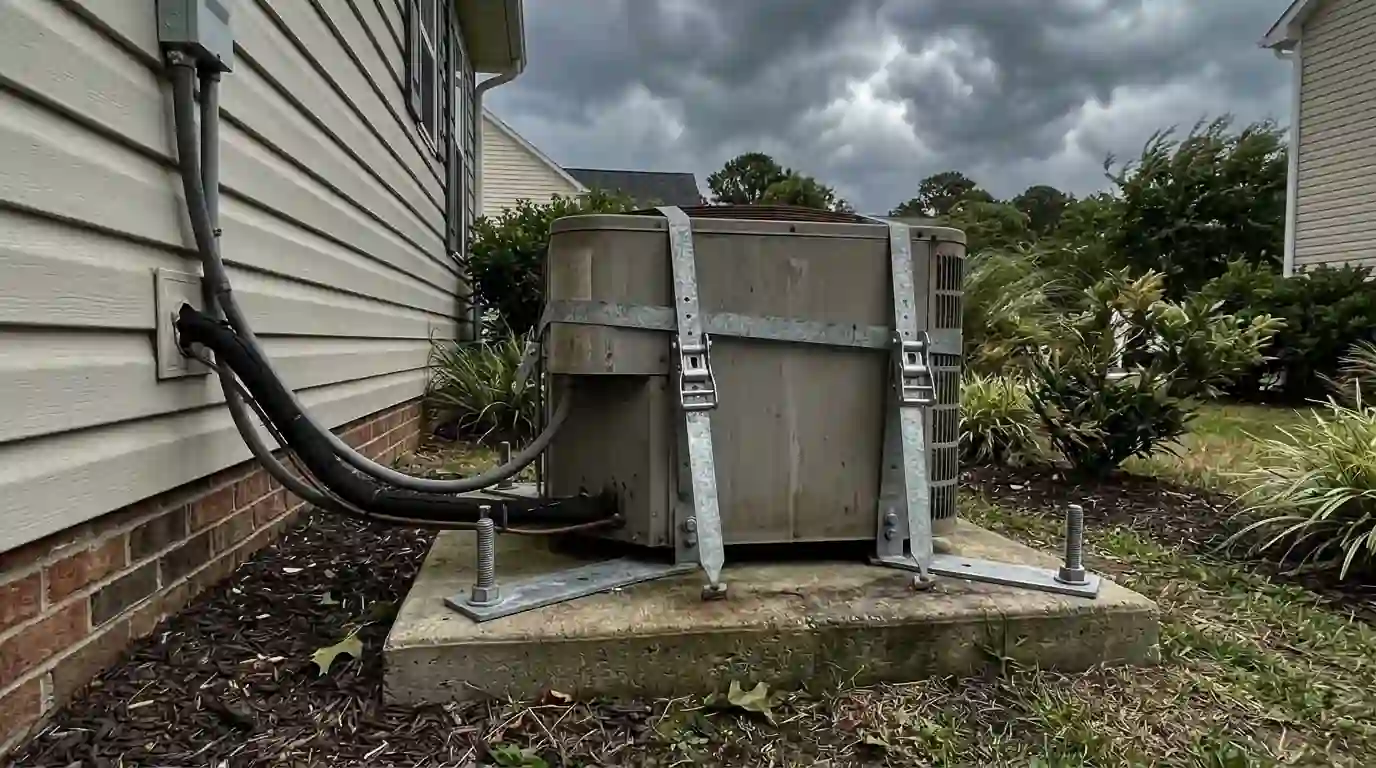
Hurricane prep for HVAC in Virginia Beach usually costs $185 to $545. It can include hurricane tie-down straps on the outdoor unit, a surge protector, a drain and disconnect check, and a simple shutdown and restart plan. After a storm, never run a system that has been under water.
Hurricane season runs June through November. High winds can tip or shift condensers on their pads, flying debris can damage coils, and power outages followed by surges can damage boards and compressors. Flood water can ruin any equipment it reaches.
We anchor outdoor units with rated straps or brackets, add surge protection, verify the disconnect works, and check that drains and pads are in good shape. We also leave you a simple plan for when to shut the system off before a storm and how to check it before turning it back on.
How the visit goes
Pad, mounting, disconnect and electrical.
Tie-downs or brackets installed.
Surge protector added.
Primary and secondary drains cleared.
Written shutdown and restart steps.
Typical price range
$185 to $545
Typical prep package. A typical range for Virginia Beach homes, not a quote. You get an exact price before any work starts.Compare ranges for every service on our typical prices page.
What to watch for
Anchors the condenser to its pad.
Protects boards and compressors when power returns.
So you can shut it off safely.
Clear drains before heavy rain.
Loose items around the unit secured.
What to check before turning it back on.
Local know-how
Hampton Roads has been hit hard by storms like Isabel in 2003 and has seen major flooding from storms like Matthew in 2016. Nor'easters bring similar wind and surge.
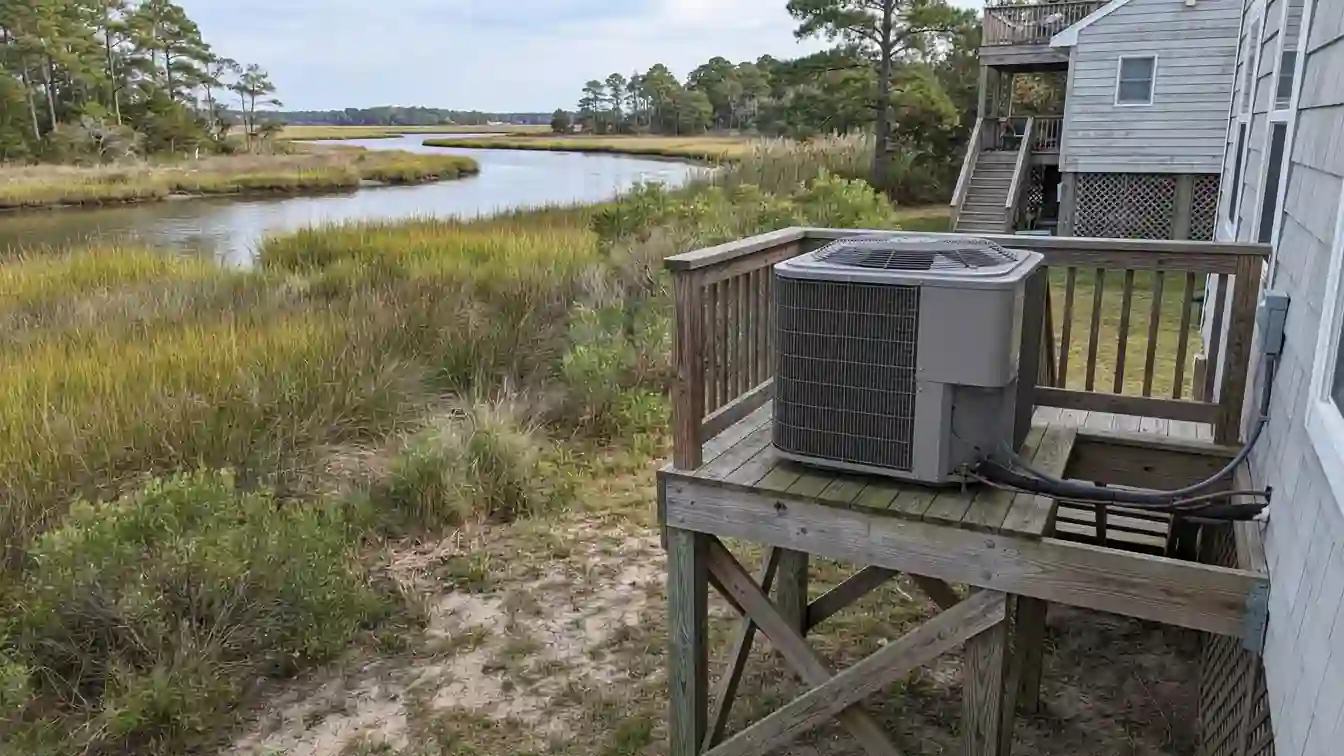
Homes in Sandbridge, along the Lynnhaven and in low parts of Chesapeake and Norfolk should also consider raising equipment above likely flood levels.
Coverage
We cover all of Virginia Beach and the surrounding cities and counties. These are some of the areas we visit most often for this work.
Related work
In flood-prone yards, raising the outdoor unit above likely flood water protects it from the next storm or king tide.
See Condenser raising and platformsFlood water ruins HVAC equipment, especially salt water.
See Flood-damaged HVACNear the ocean and the bay, salt air attacks outdoor coils and wiring year round.
See Coil cleaning and coastal coatingBecause a heat pump works in every season, it benefits from two checkups a year: one before summer for cooling and one before winter for heating, defrost and backup heat.
See Heat pump tune-up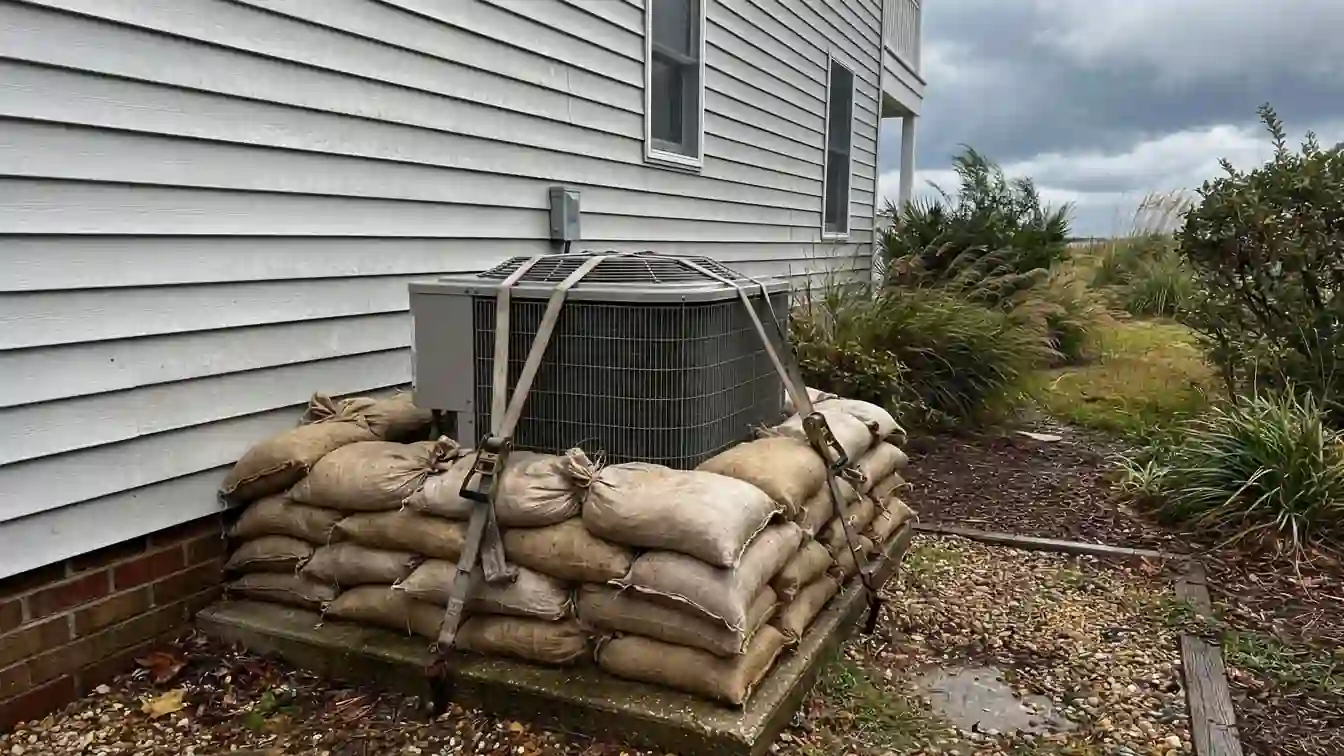
Before, during and after a storm: how to protect your outdoor unit, shut down safely and restart without damaging the system.
Questions
Turn it off at the thermostat and disconnect before the worst of the storm, and leave it off until power is stable.
Do not run it covered. A cover during the storm can help with debris but must come off before use.
No. Have it inspected first. Flooded electrical parts can be dangerous.
They reduce damage from surges when power is restored and from lightning.
Call (757) 529-6260. A person answers 24 hours a day, and you get the price before any work starts.